Brennan v Kandon, LLC, 2026 NY Slip Op 04685 (4th Dept, July 24, 2026)
A defendant moving for summary judgment in a slip-and-fall case usually reaches for the same two sentences: we didn't create the condition, and we had no notice of it. Brennan is a reminder that both halves have to be proven — and that even a defendant who clears them may still have a second, independent theory waiting.
The moving defendant's burden
The court restated the rule: "defendants had the initial burden on their motion of establishing that they did not create the allegedly dangerous condition and that they did not have actual or constructive notice thereof."
That is a conjunctive. And on this record the defendants failed: they "failed to establish that they did not create the allegedly dangerous condition by negligently mopping the area and leaving excess water on the floor."
Meaning: Notice arguments only matter for hazards you didn't create. If the water on the floor is there because of your own mop, the question of whether you had time to discover it never arrives — you cannot lack notice of your own conduct.
Two separate and distinct theories
The second holding:
"Failure to warn of an alleged hazard is a separate and distinct theory of liability from the failure to maintain premises in a reasonably safe condition, and a plaintiff may proceed on one or both of those theories."
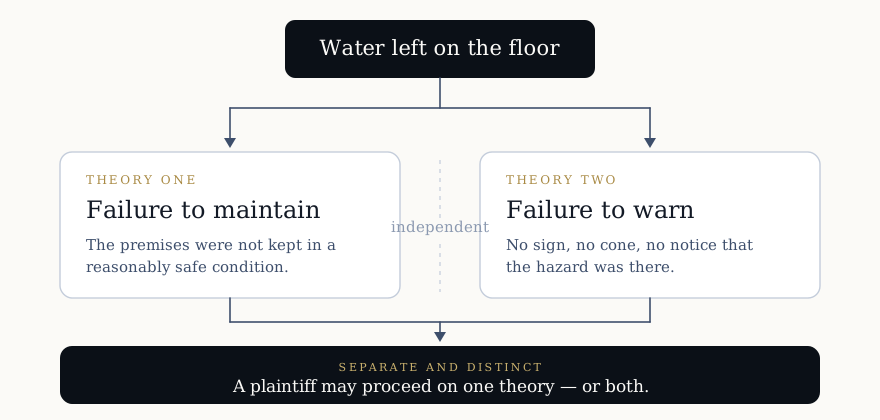
One hazard, two independent routes to liability.
These are not two ways of saying the same thing. A property owner can be liable for letting the hazard exist. Separately, and on its own, the owner can be liable for failing to warn about it. Defeating one does not dispose of the other. A defendant who convincingly shows the floor was reasonably maintained may still have to answer why no one put out a sign.
What this means for you
In plain language:
- If you slipped where someone had just been cleaning, the cleaning itself may be the strongest fact in your case. "We didn't know the floor was wet" is not much of an answer from the party holding the mop.
- The missing wet-floor sign matters on its own. Even where a business argues it maintained the property reasonably, the absence of a warning is a separate question that a court may allow a jury to decide.
- If you own or manage property. A warning symbol is not a substitute for maintenance, and maintenance is not a substitute for a warning. You can be exposed on either one, independently.
Practice point: most practitioners should plead both theories and keep them distinct in the record.
This case note is attorney commentary for general information — it is not legal advice about your situation. Every case turns on its own facts.